The Edible Archives: The Deep History of Mallorcan Gastronomy — Part II: Disruption and Revival

Part I traced Mallorcan gastronomy from its Neolithic roots through Phoenician salt, Arab irrigation, and centuries of matriarchal, largely unwritten transmission — a self-sufficient, class-divided food culture still intact on the eve of the 20th century. Part II picks up where that world ended: the meteoric arrival of mass tourism, the decades-long flattening it caused, and the deliberate, curated revival now underway.
Go to Part I: Foundations to Formation.
- 📈 Tourism surge: From 361,000 visitors in 1960 to 2.85 million by 1973, overwhelming Mallorca’s centuries-old culinary identity.
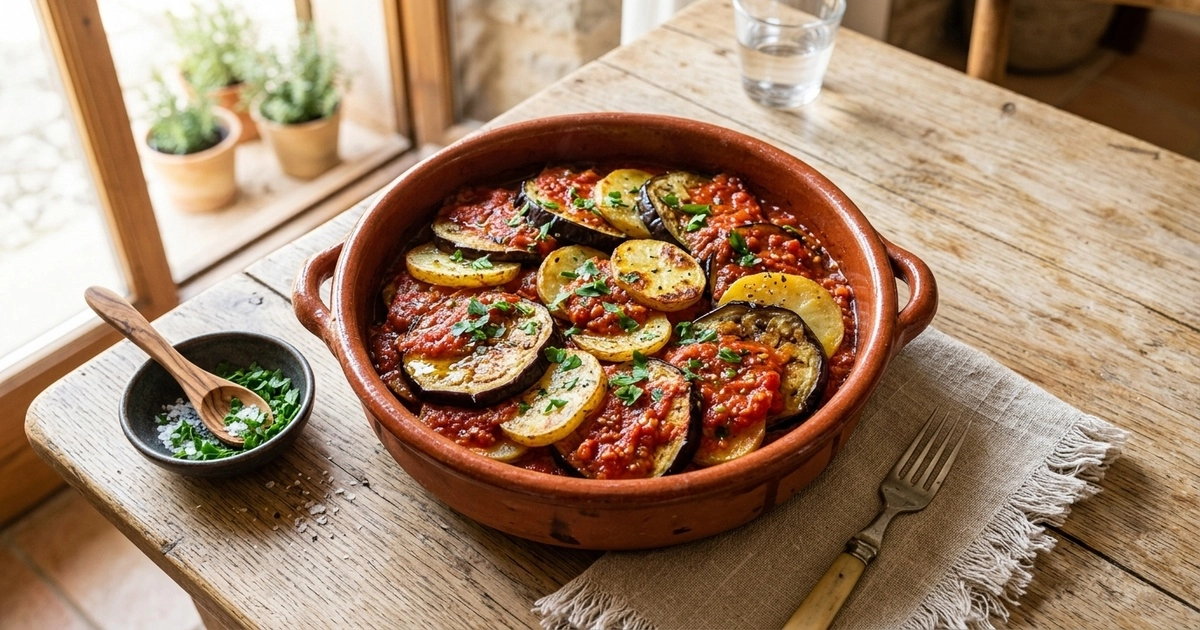
- 🎭 “Spain is Different”: Franco-era marketing imposed Andalusian clichés—paella, tapas—sidelining local treasures like tumbet and roasted pepper salads.
- 🏭 Broken transmission: Hotel kitchens and fast-food chains fractured the oral, matriarchal passing of recipes such as sopes mallorquines and escaldums.
- 🦞 Paradoxical elevation: Humble fisherman’s caldereta de llagosta and artisanal sobrassada were rebranded as luxury delicacies for the visitor’s plate.
- 🌱 21st-century revival: PGI status for Ensaïmada de Mallorca, return of heritage dishes, zero-kilometer sourcing, and artisan bakers restoring 300-year-old techniques.
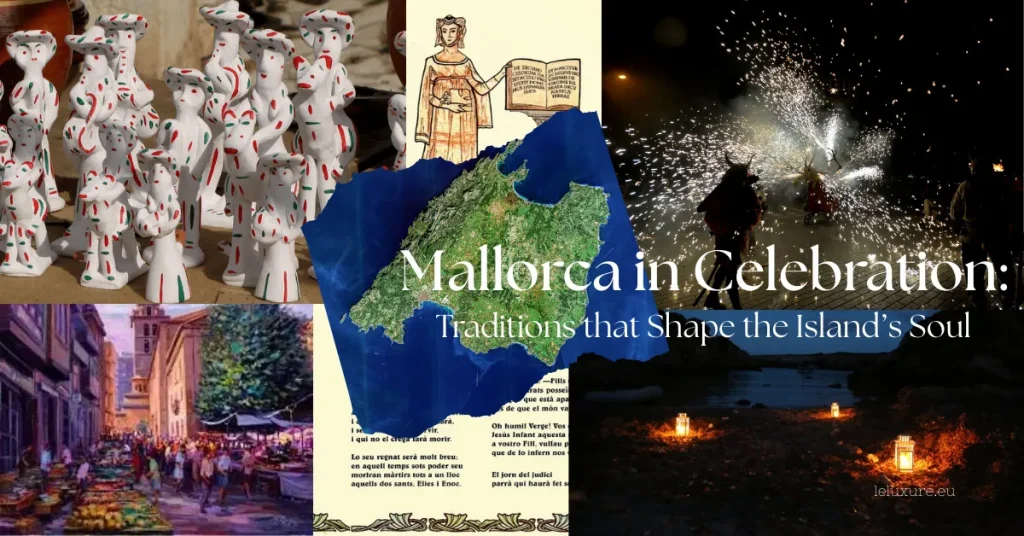
- 🔥 Living festivals: Sant Antoni bonfires, Festa des Vermar harvest rites, and UNESCO-listed Cant de la Sibil·la keep seasonal rhythms and ritual food alive.
- Discover more at le Luxure
The Meteoric Arrival: Tourism by the Numbers
The scale of what hit Mallorca in the mid-20th century is easy to state and hard to fully absorb. In 1960, roughly 361,000 tourists arrived on the island. By 1973 — thirteen years later — that number had reached 2.85 million: a nearly eightfold surge. By the 1970s, more than two million British visitors alone were arriving annually, many housed in newly built one-star hotels along the coast.
No food culture, however deep its roots, absorbs that kind of volume without changing.
“Spain is Different” and the Flattening of Mallorca
This influx coincided with Franco-era Spain’s “Spain is Different” tourism campaign — a marketing effort that sold visitors a single, clichéd, largely Andalusian idea of the country: paella, tapas, flamenco. Mallorca’s own culinary identity, distinct from that image in almost every particular, was flattened into it anyway. Paella, though Valencian in origin, became the default “Spanish” dish on tourist menus across the island — quick to batch-cook, visually dramatic, and profitable — while tumbet and roasted pepper salads quietly lost their place on the same tables to imported pizza and pasta.
For decades, local dishes were treated as “peasant food” — something to hide from the visitor, or adapt beyond recognition for a safer, more international palate.
The Industrial Kitchen and the Broken Chain of Transmission
Before the 1960s, most Mallorcans cooked at home. Tourism moved that center of gravity to restaurants and hotel kitchens almost overnight, and as younger generations left for jobs in the new tourism economy, the oral chain that had carried recipes like sopes mallorquines, tumbet, and escaldums from mother to daughter began to break.
Hotel kitchens adopted centralized cooking and pre-prepared ingredients to serve volume; fast-food chains — McDonald’s, Burger King, Pizza Hut — proliferated along the coast, a shift scholars have come to call the “McDonaldization” of Mallorcan food culture. Dishes once tied to a specific harvest, like the fideus de vermar noodle stew traditionally served at grape-harvest time, gave way to year-round, ingredient-agnostic menus that owed nothing to any particular season or place.
Paradoxical Elevations: When Peasant Food Became Delicacy
Not every dish lost ground — some were simply repositioned. Caldereta de llagosta, a lobster stew that began as a fisherman’s humble, use-what-you-caught meal, was rebranded over the tourism decades into a luxury delicacy for visitors willing to pay for it. Sobrassada and ensaïmada retained their cultural cachet even as mass production, in many cases, thinned out the artisanal nuance that had once defined them. The irony is a useful one for understanding this whole period: tourism didn’t just erase tradition, it also selectively promoted pieces of it — usually the pieces easiest to photograph or plate.
Globalization’s Second Wave
The 1990s and 2000s brought a second erosion, quieter than the first but no less thorough. Global supply chains made imported, frozen, and industrial ingredients cheaper and more convenient than local produce for many restaurants. Visitors, increasingly accustomed to familiar food wherever they traveled, continued to nudge menus toward “safe,” globally recognizable dishes. Across the island, menus converged on a narrow, repeated set of items — a flattening less visible than the fast-food wave of the 1970s, but arguably more complete.
Reclaiming the Terroir: The 21st-Century Revival
Since the 2010s, that flattening has been meeting a real counter-movement. In 2003, Ensaïmada de Mallorca received Protected Geographical Indication status — a formal, EU-recognized credential distinguishing the genuine article from imitation. Heritage dishes once dismissed as too rustic for a menu — escaldums (chicken stew), arròs brut (a saffron rice thick with meats), redonets de Santa Clara (convent pastries) — are reappearing, deliberately, on serious tables. Artisan bakeries such as Fornet de la Soca in Palma have gone further still, reviving 300-year-old ensaïmada recipes with the techniques those recipes originally called for.
This resurgence is not without its struggles. As heritage recipes reappear on high-end menus, the difficulty of executing them properly becomes obvious fast.
Take the “arròs brut,” for instance. While chefs now treat it as a masterpiece of saffron and meat, the domestic reality is often different. Tia Maria still attempts it every Christmas, though her version consistently trends toward “arròs burnt” — a culinary tragedy the rest of the family accepts with a polite, loving silence.
Alongside the recipes, there’s a renewed reverence for the raw materials themselves: the native porc negre (black pig), DO Binissalem wines, and a “zero-kilometer” sourcing model that, historically, was never really a trend — it was simply how the island ate before refrigeration and imports made anything else possible. Initiatives like Deià Gratias, a slow-food project at Belmond’s La Résidencia, champion exactly this: local ingredients, time-honored method, no shortcuts.
The revival, however, raises an uncomfortable question: when a dish returns to the table, what exactly has been recovered? The recipe, perhaps. The ingredients, sometimes. But a culinary culture is more than either. It is season, occasion, household, memory, labour — and the people who knew instinctively when something was ready without consulting a recipe.
Festivals as Living Memory
The island’s calendar still carries the old rhythms, for anyone paying attention. Sant Antoni and Sant Sebastià, in January, open the year with bonfires, correfocs (fire runs), and neighborhood barbecues built around sobrassada, botifarrons, rustic bread, and red wine. Festa des Vermar, in late September, marks the grape harvest with dishes like fideus de vermar and vegetable-topped cocarrois. Produce fairs — almond blossom, orange, melon, the sweets-focused Fira Dolça — punctuate the rest of the calendar with seasonal specificity that no supermarket menu can replicate. Even the Cant de la Sibil·la, the Christmas Eve chant recognized by UNESCO as Intangible Cultural Heritage, shows how tightly food, music, and ritual remain woven together here.
Luxury, Storytelling, and the Concierge’s Table
For today’s luxury traveler, this whole arc — Phoenician salt to Arab almonds, Inquisition-era lard to EU-protected pastry, peasant stew to fine-dining centerpiece — turns a single meal into a narrative rather than a transaction. That is the real value in understanding this history before eating it: a plate of sobrassada, a flaky ensaïmada, a spoonful of properly made arròs brut, each carries centuries of adaptation, resistance, and identity behind it.
Mallorca today cooks in several registers at once. One is fast, standardized and largely indifferent to place. Another is seasonal, local and deeply conscious of where it comes from. Between them is a great deal of territory — restaurants negotiating, sometimes successfully and sometimes not, between the expectations of visitors and the memory of the island.
Knowing the difference, and knowing where to look, is where the concierge‘s real value begins.
Go Back to Part I: Foundations to Formation.
Recommended Reading from our Blog
How did mass tourism flatten Mallorcan gastronomy?
The flattening mechanism
- Franco-era “Spain is Different” marketing imposed a single Andalusian cliché—paella, tapas, flamenco—over Mallorca’s distinct culinary identity, sidelining tumbet and roasted-pepper salads in favor of batch-cooked, photogenic, profitable dishes.
- Local preparations were reclassified as “peasant food,” either hidden from visitors or adapted beyond recognition for a safer international palate of pizza, pasta, and year-round, season-agnostic menus.
- Fast-food chains proliferated along the coast while hotel kitchens centralized production, completing the first wave of what scholars later termed the McDonaldization of island cuisine.
Why did Mallorca’s oral recipe transmission break?
Structural rupture
- Younger islanders left domestic cooking for tourism employment, while industrial kitchens adopted pre-prepared ingredients and centralized methods to serve unprecedented volume.
- Harvest-tied dishes such as fideus de vermar, once bound to the grape season, dissolved into ingredient-agnostic menus that owed nothing to any particular place or calendar.
- A quieter second wave in the 1990s–2000s made imported, frozen, and industrial products cheaper than local produce, accelerating menu convergence toward a narrow set of globally recognizable items.
How are heritage Mallorcan dishes being deliberately revived?
Revival in practice
- Artisan bakeries such as Fornet de la Soca in Palma recover three-century-old ensaïmada techniques; projects like Deià Gratias at Belmond La Residencia champion zero-kilometer sourcing of porc negre, DO Binissalem wines, and time-honored method without shortcuts.
- The same elevation that once turned fisherman’s caldereta de llagosta into a luxury delicacy now returns peasant stews to serious tables, though domestic execution remains imperfect—arròs brut still risks becoming “arròs burnt” in family kitchens.
- What was once simply how the island ate before refrigeration is now a conscious ethic: local ingredients, seasonal rhythm, and resistance to the homogenized alternative.
What living memory do Mallorcan festivals preserve?
Calendar as archive
- Sant Antoni and Sant Sebastià open January with bonfires, correfocs, and neighborhood tables of sobrassada, botifarrons, rustic bread, and red wine.
- Festa des Vermar in late September marks the grape harvest with fideus de vermar and vegetable-topped cocarrois; almond, orange, melon, and Fira Dolça fairs punctuate the year with precise seasonal offerings.
- Even the UNESCO-recognized Cant de la Sibil·la on Christmas Eve demonstrates how tightly food, chant, and ritual remain woven together on the island.
How does gastronomic history enrich the luxury table?
Two kitchens, one island
- Mallorca now operates two parallel systems: one homogenized and fast, engineered for volume; the other slow, seasonal, and story-rich, reserved for those willing to ask what they are eating and why.
- Knowing the difference—and knowing where to find the second kitchen—constitutes the quiet expertise on which a true concierge’s table is built.
- Understanding this arc transforms the meal from consumption into immersion, restoring the sensory and historical depth that mass tourism once threatened to erase.

Sources consulted for this piece include academic and press accounts from the Universitat de les Illes Balears digital archive, ARA, and heritage and hospitality publications cited inline above. Read Part I: Foundations to Formation for the island’s culinary history before the tourism era.